



When a safety incident occurs, the immediate focus is on addressing the situation and ensuring everyone is safe. The next critical step is preventing further incidents by understanding why it happened. Post-incident investigations often look at processes and equipment, but it’s equally important to consider the human factors involved. 90% of safety incidents can be attributed to human error (source). TalentClick’s Team Reports offer a powerful tool for post-incident coaching, helping organizations identify and address the behavioral traits that can contribute to risk.
By understanding the inherent risk-related traits of the individuals within a team, you can provide targeted coaching, strengthen your safety culture, and proactively reduce the likelihood of future incidents. This approach moves beyond blame and focuses on development, creating a more resilient and safety-conscious workforce.
The Role of Personality in Workplace Safety
Every employee brings a unique set of personality traits and workstyles to their role. While these differences can be a source of strength, certain traits can increase risk, especially in safety-sensitive environments. An individual who is naturally impulsive, resistant to rules, or easily distracted may be more prone to accidents than someone who is cautious and detail-oriented.
Understanding the safety risk traits of employees before they step into a role is critical for creating a safer workplace. TalentClick’s Safety Quotient assessment is a proactive tool designed to identify at-risk behaviors and personality traits that could affect safety outcomes. By utilizing Safety Quotient prior to onboarding new team members, organizations can take preventive action, offering targeted training and support to address potential vulnerabilities. This proactive approach not only enhances individual and team performance but also significantly reduces the likelihood of safety incidents, fostering a culture of awareness and prevention.
Following a safety incident, it’s vital to assess the team involved and identify these at-risk traits. This isn’t about singling out individuals. Instead, it’s about gaining insight into who or which teams might need more focused support, training, and coaching. TalentClick’s solutions are specifically designed to provide these insights, turning a reactive situation into a proactive opportunity for improvement.
Using Team Reports for Effective Post-Incident Coaching
TalentClick’s Team Reports aggregate individual behavioral data to give you a holistic view of your team’s dynamics. This process provides clear, actionable data to guide your post-incident coaching strategy. Here’s how you can activate Team Reports in three simple steps.
Step 1: Assess Individual Personality Traits
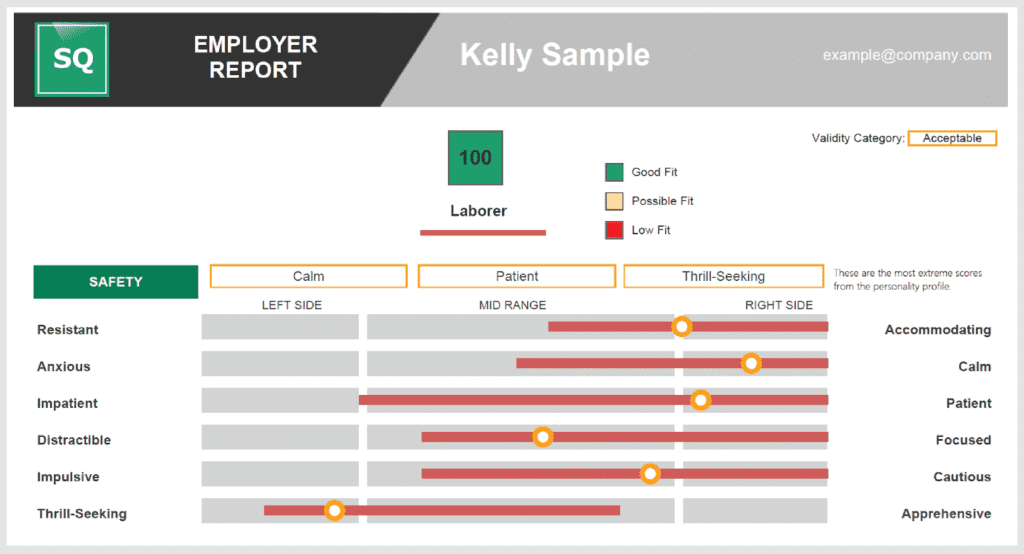
The foundation of a useful Team Report is accurate individual data. The first step is to have each member of the team complete one of TalentClick’s Behavioral Assessments, such as the Safety Quotient (SQ). These assessments provide a deep dive into each person’s workstyle, personality, and on-the-job behaviors related to safety.
The individual reports highlight specific traits, such as:
- Resistant vs. Accommodating: Is the employee more likely to follow rules or challenge them?
- Impulsive vs. Cautious: Do they act quickly without thinking, or do they pause to consider consequences?
- Distractibile vs. Focused: Can they maintain concentration on the task at hand?
Each employee can also receive a participant report with personalized self-coaching tips. This empowers them to understand their own default tendencies and take ownership of their personal development, fostering a culture of self-awareness and positive behavior change.
Read more about how a construction and engineering organization reduced its incident rate by 59%.
Step 2: Create a Comprehensive Team Report
Once individual assessments are complete, TalentClick’s portal allows you to easily aggregate the results into a single, powerful Team Report. This report visually maps out the personality traits of the entire team, allowing managers and safety professionals to see the bigger picture.
With our advanced workforce analytics, you can:
- Identify Patterns and Trends: Quickly spot if multiple team members share high-risk traits, which could indicate a systemic issue.
- Pinpoint Potential Gaps: Discover if your team lacks individuals with cautious or rule-compliant traits, creating an imbalance.
- Highlight Areas of Strength: Recognize team members who exhibit strong safety-oriented behaviors and can act as mentors or role models.
This consolidated view is essential for making informed decisions. It helps you understand not just individual risk, but how team dynamics might contribute to safety lapses.
Step 3: Share, Discuss, and Enhance with Safety Self-Awareness Training
The final step is to share the Team Report insights with your employees and facilitate a group discussion focused on understanding, collaboration, and growth. This is an important opportunity to build trust and reinforce that the aim is collective improvement, not individual blame.
To further support this conversation and maximize learning, incorporate Safety Self-Awareness (SSA) training into your process. This innovative, personalized training program educates participants on how their unique personality traits contribute to safety risks in the workplace. By combining SSA training with the Team Report discussion, employees gain deeper insight into their own “default settings” and how these can impact safety, leading to actionable strategies for improvement.
During your session, emphasize that there are no “good” or “bad” personalities. A balanced team needs a mix of workstyles to perform at its best. The objective is to foster awareness of how different traits appear on the job and use Safety Self-Awareness training to equip team members with the skills to recognize and manage their own risk factors. This collaborative and educational approach not only improves how team members interact and support each other but also strengthens your overall safety culture.
The Benefits of Data-Driven Post-Incident Coaching
Integrating TalentClick Team Reports into your post-incident strategy offers significant advantages for your organization.
- Reduce Future Workplace Incidents: By proactively identifying and coaching employees with high-risk traits, you address the root cause of many human-factor incidents. This data-driven approach allows you to focus your resources where they will have the most impact, leading to a measurable reduction in accidents.
- Improve Team Dynamics: These reports open the door for honest conversations about workstyles and communication. When team members understand each others’ natural tendencies, they can adapt their interactions, reduce conflict, and collaborate more effectively.
- Build a Stronger Safety Culture: Moving from a reactive, punitive model to a proactive, developmental one sends a powerful message. It shows that your organization is invested in its employees’ growth and well-being. This commitment strengthens your safety culture, making every employee an active participant in maintaining a secure workplace.
TalentClick Team Reports provide the actionable insights needed to turn a safety incident into a valuable learning experience. By looking beyond individual actions to understand team-wide behavioral dynamics, you can build and develop high-performing teams that are not only productive but also safer and more resilient.


