




Summer changes the rhythm of a workplace. Teams rotate through vacations, people cover roles that aren’t quite their own, the pace picks up, and yes, even the heat itself can shorten everyone’s patience a little. It’s also one of the best times of year to witness real leadership. Anyone can look composed when the schedule is predictable, and the team is fully staffed. The leaders worth investing in are the ones who stay effective, fair, and clear-headed when the season gets busier, and the team gets leaner.
That’s where conflict management style comes in, and why it’s one of the most useful things a leadership potential assessment can reveal.
Being good at the job and being ready to lead are two different things
Most organizations promote based on what’s easiest to measure: sales numbers, project delivery, technical know-how. Those are real strengths, and they matter. But they don’t tell you how someone handles a disagreement between two team members, responds when a direct report pushes back, or moves a decision forward when not everyone agrees. That skill lives in a different part of the leadership toolkit, and summer is a great time to see it in action when coverage gaps and tighter timelines naturally create more moments where it’s needed.
The good news: conflict management style isn’t something people either have or don’t. It’s a pattern that can be identified, understood, and developed, which is exactly why TalentClick’s Leadership Profile (LP) measures it directly.
Five styles, five strengths — knowing which one to use when
The LP’s Conflict Management Style component identifies which of five approaches a person naturally leans on when conflict shows up. Each one is a genuine strength in the right moment:
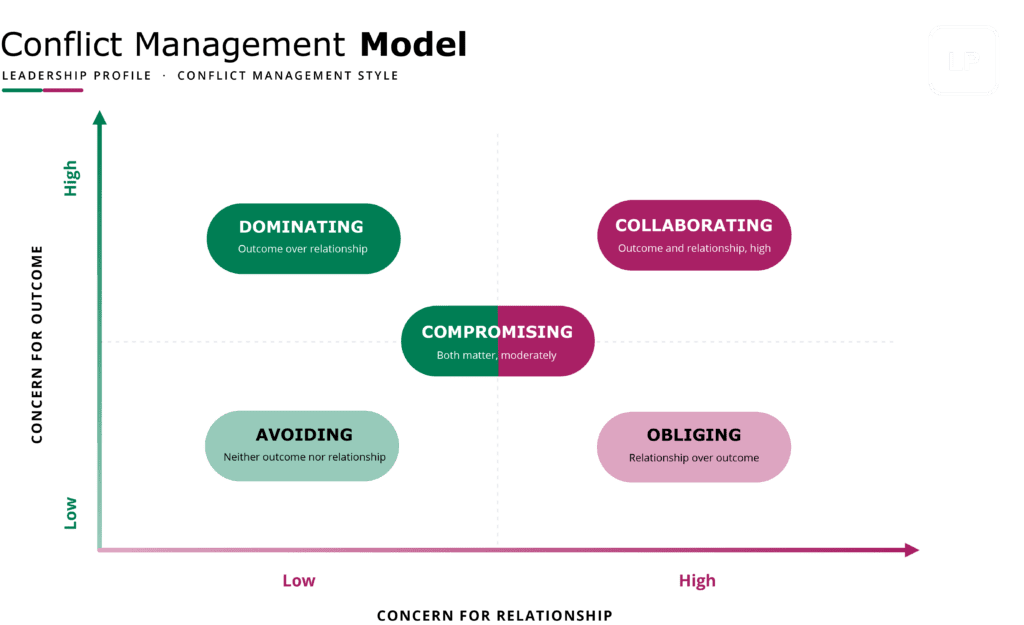
Dominating — resolving conflict by holding firm on a position. This is the right call when a fast, safety-critical decision is needed, like a supervisor confidently overruling a shortcut during a rushed summer changeover. It works best when the outcome matters more than the relationship in that moment.
Obliging — giving ground to keep things moving. A strong choice when the issue matters more to the other person than to you, or when preserving a relationship is the priority. It’s a generous, team-first style when used deliberately (but not too often).
Collaborating — working toward a solution where everyone gets what they need. This is the style that shines when addressing complex problems, like two team leads jointly figuring out how to redistribute a vacationing manager’s workload so both teams stay strong.
Compromising — both sides adjusting to reach a workable middle ground. A practical, efficient choice when a full collaborative process isn’t realistic with a leaner team and a deadline that isn’t moving.
Avoiding — stepping back rather than engaging right away. This is a smart, intentional move for a trivial disagreement, or when a short pause will lead to a better conversation than jumping in during a heated moment. Avoiding conflict in ALL situations is a leadership red flag, but it’s a powerful choice to make when appropriate.
Why this belongs in a leadership potential assessment
The best leaders aren’t defined by having one “correct” style. They’re defined by self-awareness — knowing their natural default, recognizing what a given situation actually calls for, and having the range to flex when it counts.
This is exactly why Conflict Management Style is built into the Leadership Profile alongside workstyle and business reasoning, rather than treated as a side note. Leadership potential isn’t only “is this person good at their job” — it’s whether they can read a room, understand what’s at stake, and choose the approach that gets the best outcome for both the people and the business. That’s a learnable, measurable skill, and identifying it early means you can develop it deliberately instead of leaving it to chance.
As your team deals with the busiest, thinnest-staffed weeks of the summer, it’s a great moment to find out which of your current or emerging leaders already have strong conflict management instincts — and which ones would benefit from a little coaching before the next high-pressure moment hits. Either way, you’ll walk away with a clearer picture of who’s ready to lead.


